Supporting Healthcare from Behind the Scenes
“We Might Not Interact with Patients, but Our Work is Essential to Healthcare”
- A Perspective from the SPD Frontline at Alfresa Medical Service Corporation -
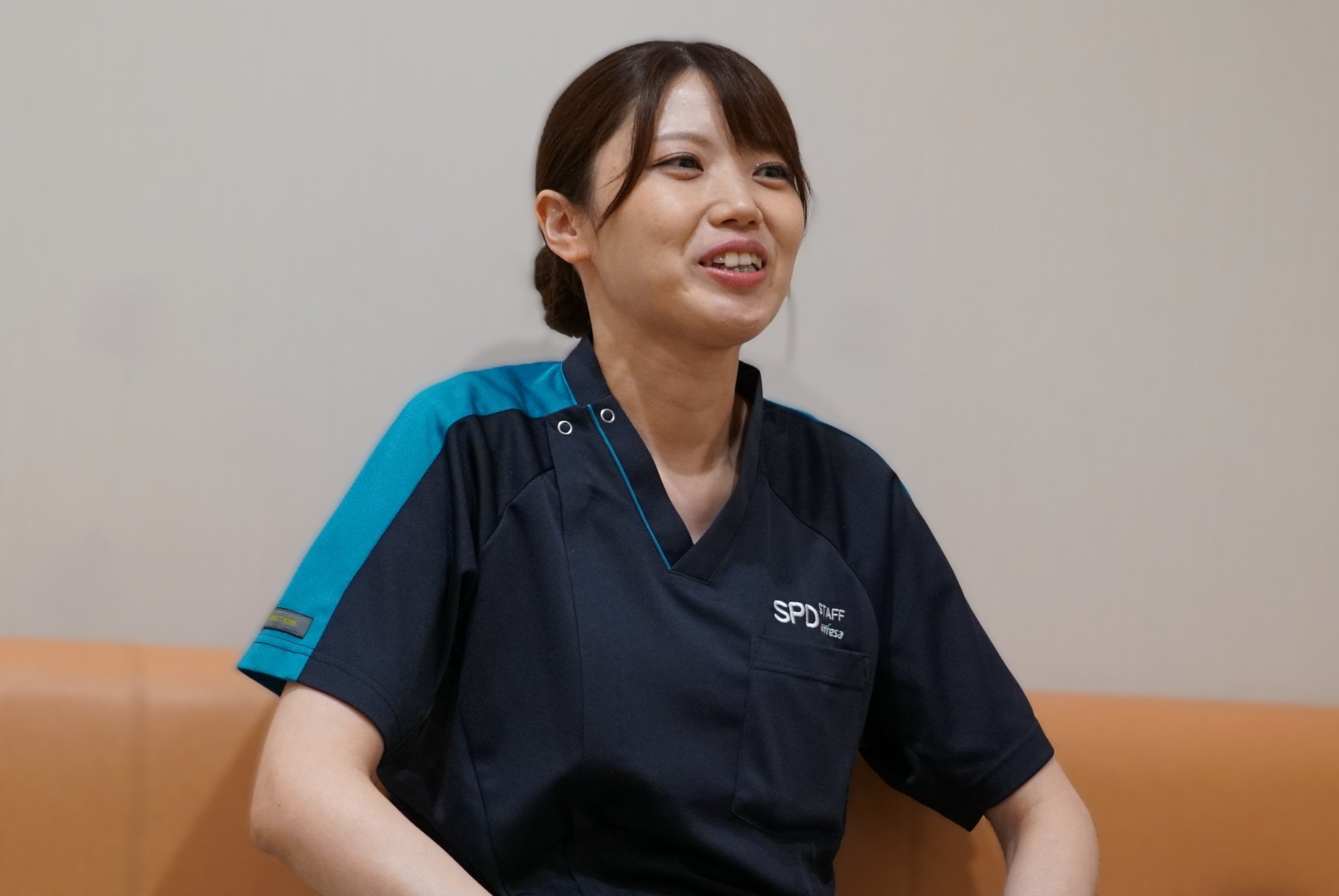
Hospitals employ a wide range of professionals, including physicians, nurses, and pharmacists. Less widely known are the people who support the medical frontline from behind the scenes. One such role is supply, processing and distribution (SPD), or in-hospital logistics, a service provided by Alfresa Medical Service Corporation. For this feature, we spoke with Ms. Yoshida, who is engaged in pharmaceutical SPD operations at a children’s hospital in Tokyo, and discussed what makes her work rewarding, the challenges she faced during the COVID-19 pandemic, and her goals for the future.
First, please tell us about your work.
We at Alfresa Medical Service Corporation provide SPD services. These involve managing medical materials and pharmaceuticals used in hospitals and supplying them where and when they are needed. Patients often interact with physicians, nurses, and pharmacists at hospitals, but there are many other people working in the background. We rarely interact with patients—we’re like hidden helpers supporting healthcare behind the scenes.
Hospitals have pharmaceutical storerooms that stock many different types of medication. The work involves taking the required drugs in the required quantities from storage and delivering them to the wards, managing inventory, and checking expiration dates and production lot numbers. I am responsible for pharmaceutical SPD and work onsite in a hospital’s pharmacy department, supporting pharmacists so that they can focus on their own specialized work.
I actually wasn’t aiming to pursue a career in SPD at first. I was uncertain about my future at the time and joined the company as a part-time employee while studying to obtain a qualification. But while working onsite, I gained experience with the support of the people around me, and I discovered how rewarding it can be to support a hospital. I saw how my own ideas could improve operations, make it easier for everyone in the workplace to work, and support the hospital as a whole. As these experiences accumulated, I gradually came to realize that I enjoyed this line of work.
At a children’s hospital, drug dosages vary according to the patient’s age and weight. This presents different challenges from those at hospitals that treat adults, making each individual check even more important. The weight of the responsibility makes my work worthwhile.
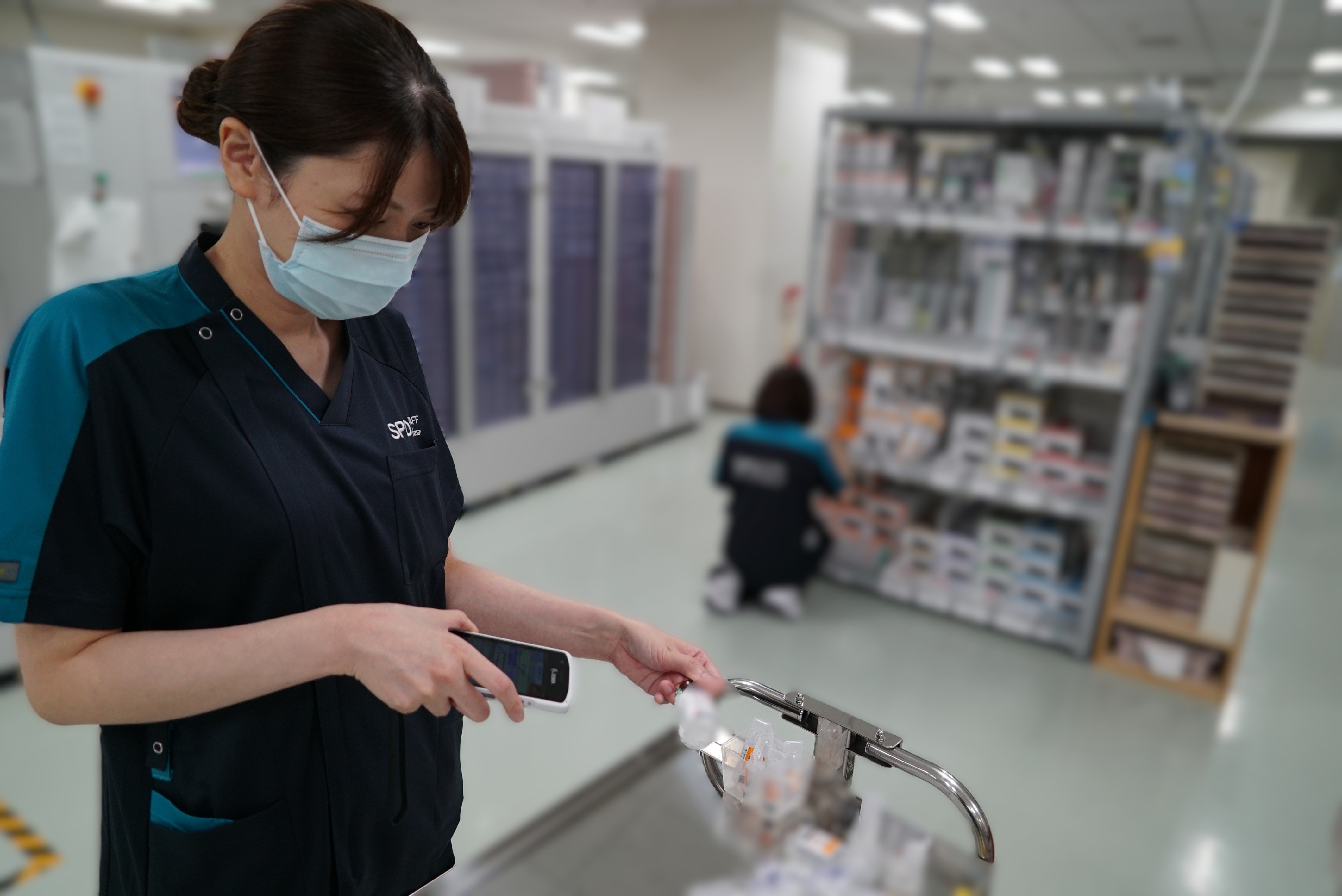 Accurate inventory management supports medical operations at this children’s hospital.
What events have stuck with you the most in your career?
One thing I’ll never forget was the COVID-19 pandemic. Everyone was working to get through the difficulties together. Because it was an unknown disease, we were all anxious about it. But the hospital couldn’t stop operating. The supply of drugs couldn’t be halted. I had many discussions with the pharmacists and nurses about how to continue operations while maintaining everyone’s safety. Unable to enter the wards, we made new procedures one by one, such as deciding on where to deliver drugs and how to verify expiration dates. We had so many discussions—“How about doing it this way?” “That might be too difficult”—and working through the challenges like this was what really stuck with me.
Our work involves assisting pharmacists, but it feels more like we are one team despite our different roles. If we encounter a problem in a ward, the pharmacists help us, and sometimes the pharmacy department consults us as well. Rather than drawing distinctions between SPD staff and pharmacists, we’re all working to make the hospital better overall. For many years, we’ve received high satisfaction ratings in the hospital survey, and I’m very grateful for that. I think our daily communication and improvement efforts are behind those high ratings.
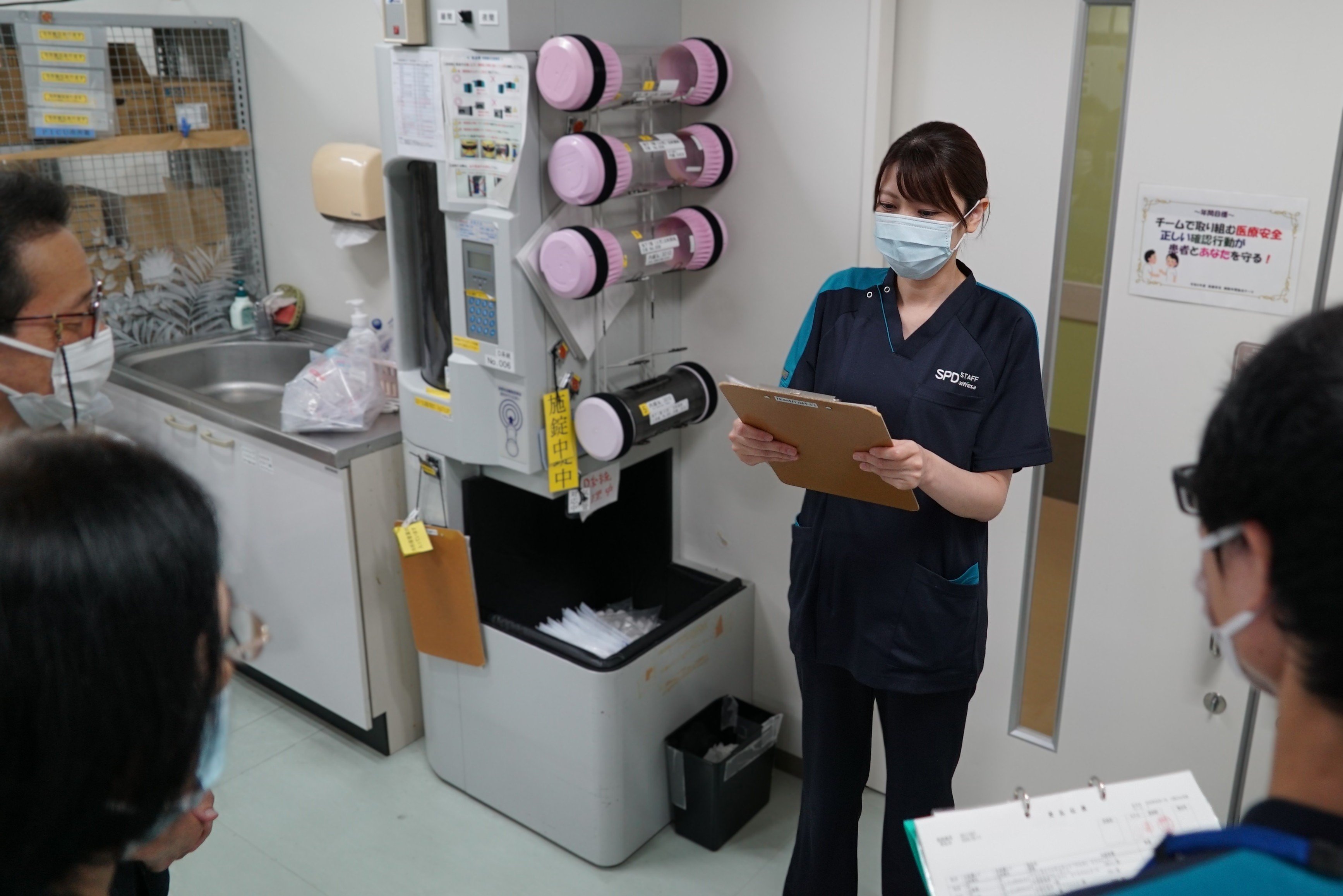 Staff hold meetings to share issues and work as a team to make improvements.
Which of your initiatives has produced particularly notable results?
It was an initiative to reduce discrepancies in drug inventory. Every month, we analyzed which drugs showed discrepancies, investigated the causes, and introduced regular checks. As a result, discrepancies dramatically decreased. We also cooperated with the hospital to create a framework for verifying that there were no mistakes such as omissions in medication billing. This improved billing accuracy, and the hospital was delighted. We didn’t achieve that on our own - it was the result of working together with the people at the pharmacy department and medical affairs section. Being able to contribute even to the hospital’s management has been very rewarding.
The SPD operations require coordination not only within the hospital, but also with the Alfresa Group’s wholesaling companies. We share information with Group companies on a daily basis, and are also working to create a framework for ensuring a stable supply of the pharmaceuticals needed. Because drug supplies are unstable nowadays, it’s also particularly important to predict what drugs will be needed and when. Information such as “Prescriptions of this drug will probably increase” and “This might be required in the near future” is shared with marketing specialists (MSs) at Group companies at an early stage. Conversely, if we urgently need a drug, we sometimes consult the MSs, who then respond quickly. When the hospital, the group companies, and we SPD staff work together, we can ensure the required medication continues to be delivered to the patient. I believe this is a strength unique to the Alfresa Group.
What challenges are you currently facing?
Raising awareness of SPD services. And developing human resources. SPD services are still largely unknown. I think a lot of people looking at job ads are unsure what the work entails. But in actual practice, people can start without any special pharmaceutical knowledge. What’s important is to never fail to verify things, and to ask when you’re unsure. That’s enough.
There are all kinds of people in the workplace. People who like detailed work, people who like supporting others, people who like being physically active, people who are good at communicating - there’s a place for everyone to make the most of their individual strengths.
Lastly, please tell us about your goals for the future.
Going forward, I want us to strive to be indispensable and to continue being a presence that the hospital is glad to have around. To achieve that, I think it’s important to avoid complacency and continue to adopt new ideas. In this respect, it’s really valuable when new employees share input such as “This is hard to understand,” because one begins to take things for granted after years on the job. I want us to value each team member’s opinions and work on creating a better workplace and better services. SPD is still far from being a widely known profession, but it’s essential to hospitals, and it’s an environment where people can grow while seeking advice from the people around them even without having medical knowledge of their own. If you’re even a little interested, I hope you’ll give it a try.
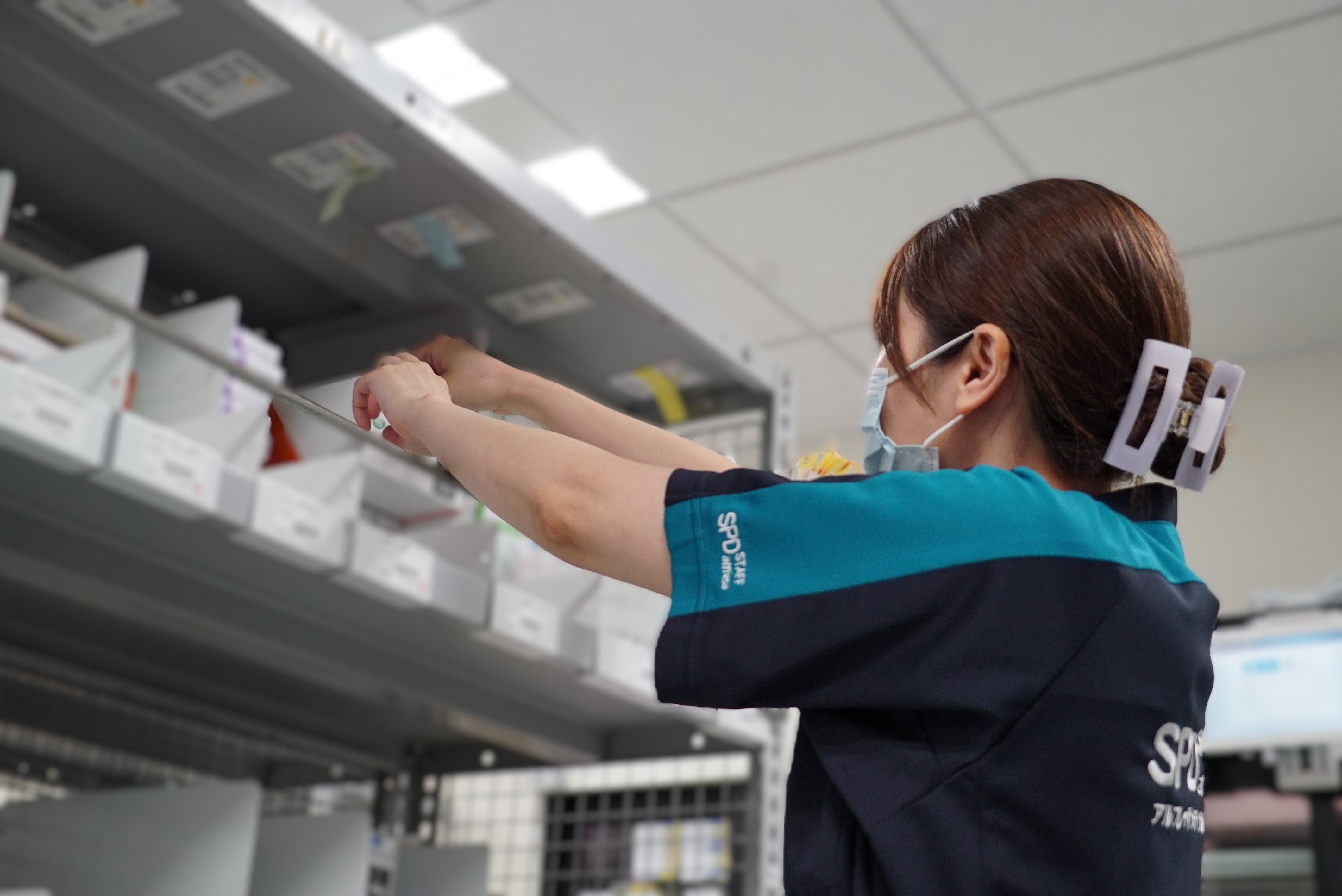 Ms. Yoshida listens to new employees’ input while working to create a better workplace.
Message from Ms. Yoshida’s supervisor
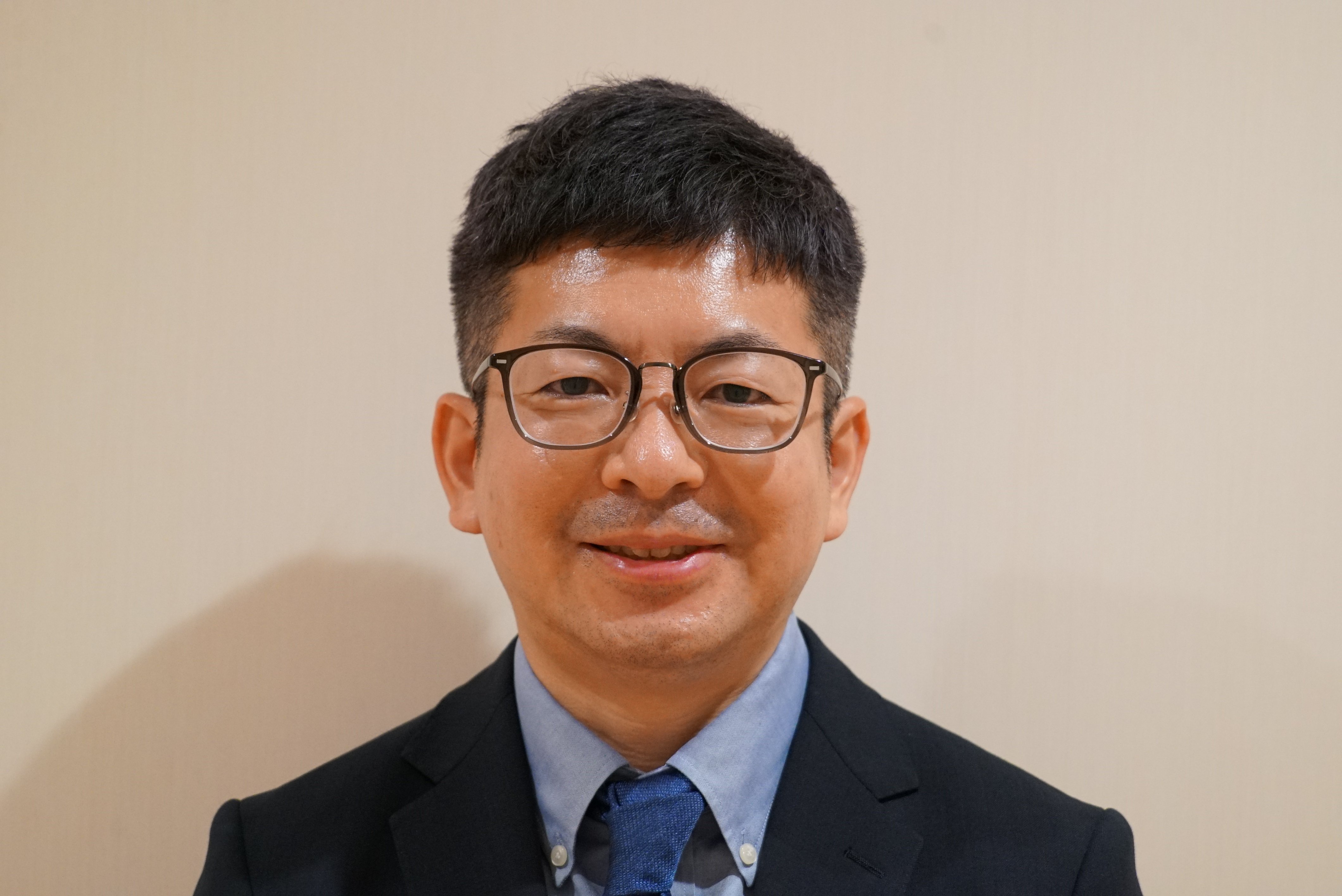 Mr. Yoshifumi Inami, SPD Section 1, SPD Department 1, SPD Business Headquarters, Sales Headquarters,
Alfresa Medical Service Corporation
We provide SPD services, which support healthcare at hospitals from behind the scenes. Although patients might not notice us, every task we perform helps to make healthcare safe. The appeal of our work lies in supporting healthcare as a team by helping to provide stable supplies of pharmaceuticals and other materials in coordination with not only hospital personnel, but also the Alfresa Group’s wholesaling companies. Ms. Yoshida is motivated by a desire to work for patients’ benefit, support others through her work, and build a career in the medical industry. Although she joined our company with no prior experience, she gained experience and now plays an active role in site operations.
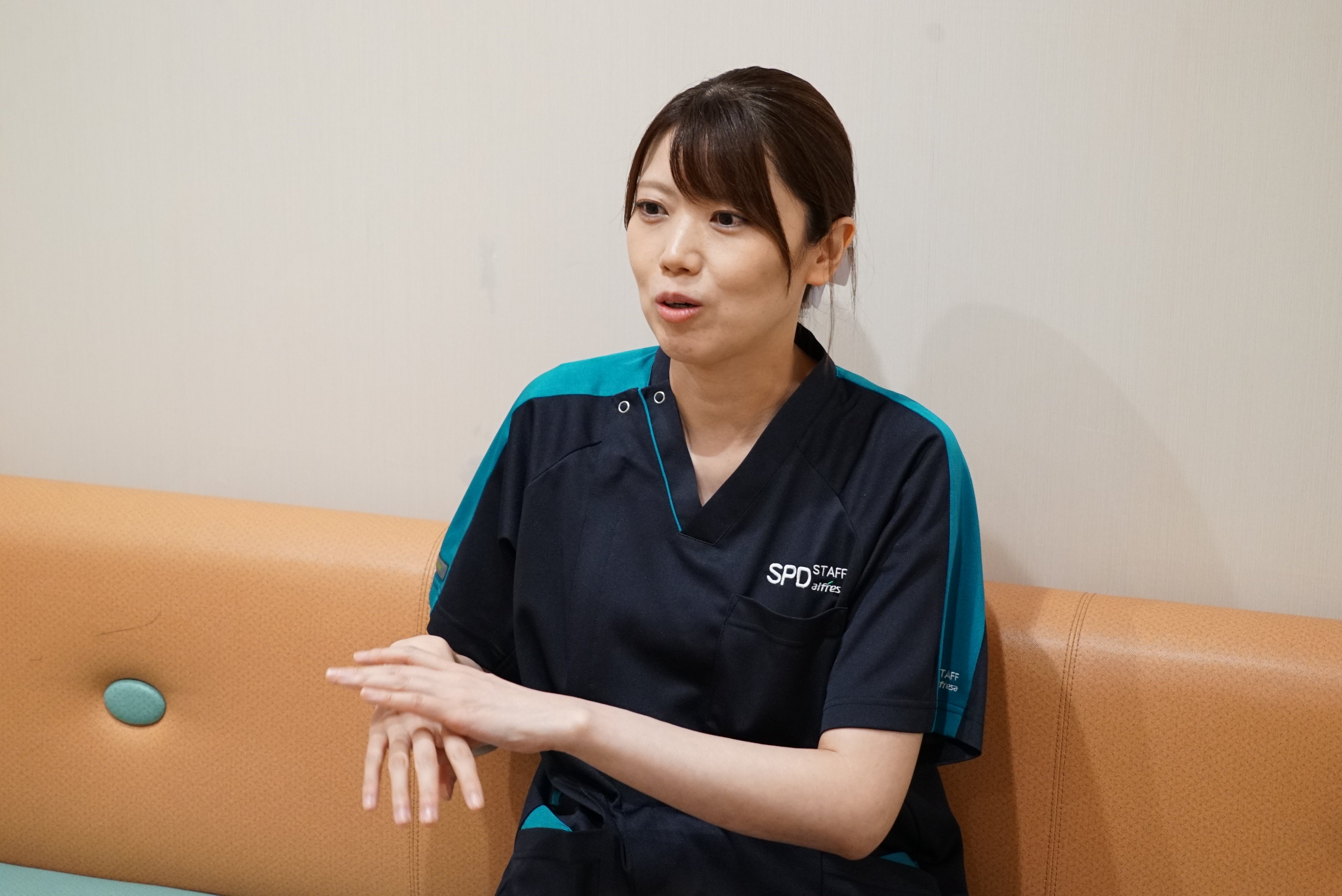 Ms. Yoshida wants people to know how rewarding SPD can be and encourages others to join her in supporting healthcare.
Notice: This document is a translation of the original Japanese document and is for reference purposes only. In the event of any discrepancy between this translated document and the original Japanese document, the latter shall prevail.