“Put Yourself in the Shoes of the Customer’s Staff.”
- A Marketing Specialist Connecting the Medical Frontline and Patients While Tackling Healthcare Challenges -
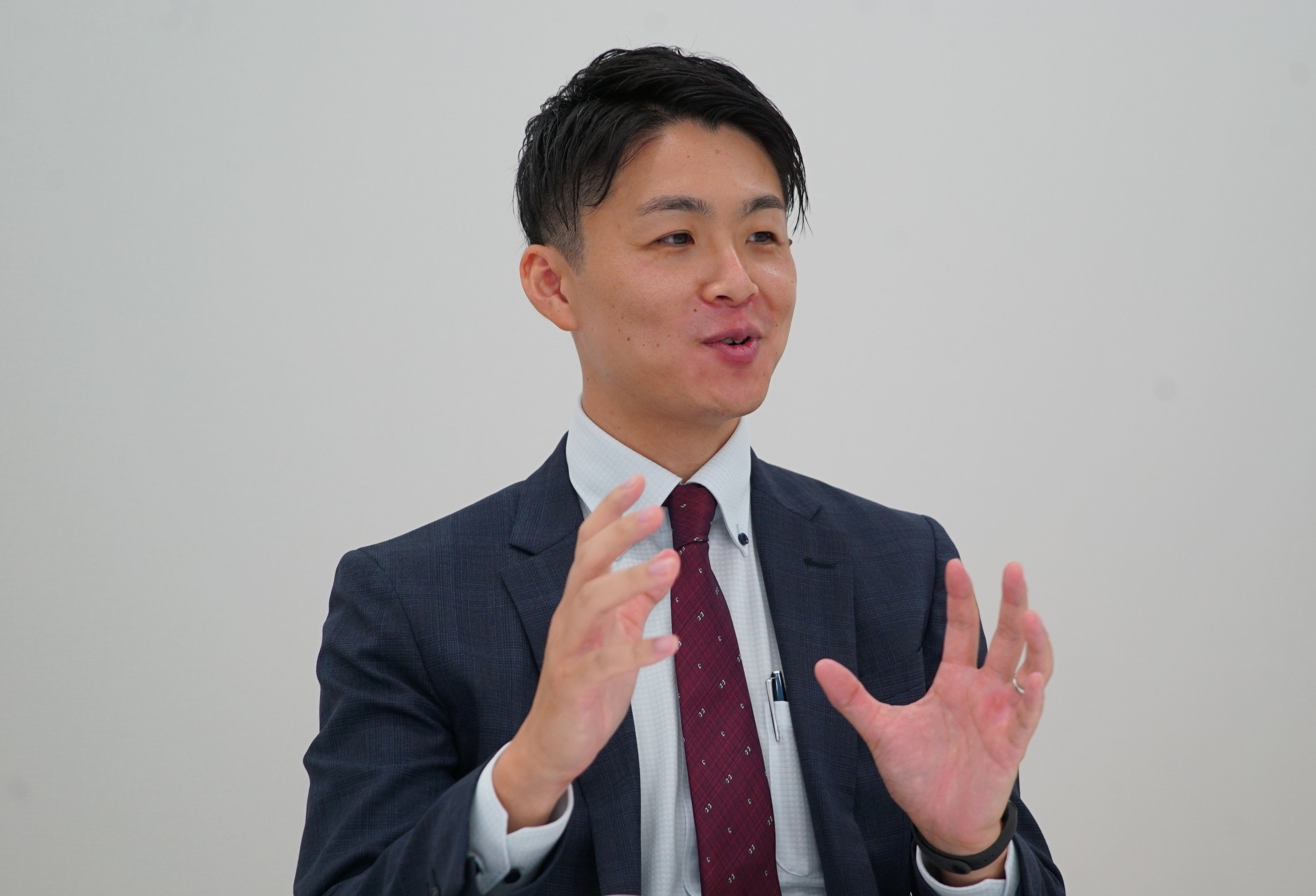 Mr. Kenta Suezawa, Assistant Manager, Takamatsu Section 1, Takamatsu Branch 1, Shikoku Alfresa Corporation
Kenta Suezawa is from Kagawa Prefecture. As of September 2026, he is an assistant manager in Takamatsu Section 1 at Shikoku Alfresa Corporation’s Takamatsu Branch 1. After attending university in Kyoto, he returned to his home prefecture and joined the company. He is currently in charge of sales to a university hospital within Kagawa Prefecture and works as an MS* connecting the medical frontline and patients. We asked him about his thoughts on his work and what he hopes to achieve.
*MS: Stands for marketing specialist, salesperson with specialized expertise at a pharmaceutical wholesaler
Please tell us about your work.
As the assistant manager of Takamatsu Section 1 at Shikoku Alfresa’s Takamatsu Branch 1, I’m responsible for sales to a university hospital within Kagawa Prefecture. The work of an MS goes beyond simply delivering pharmaceuticals—it’s an important role that supports regional healthcare by understanding the issues faced by medical institutions, providing necessary information, and proposing services. At the university hospital, I have opportunities to converse with not only physicians and pharmacists, but also laboratory and administrative staff. I ask them what issues they face in their respective roles, and once I have gained an understanding of these issues, I gather information and make proposals that can lead to solutions.
What principles do you value in your work?
The principle I value most is “Put yourself in the shoes of the customer’s staff.” I make sure to consider how I would think if I were a staff member at a hospital, or what I would want if I were a staff member at a pharmacy. I learned this mindset from a supervisor when I was a new employee, and have valued it ever since. The idea is that building trust starts with considering the other party’s perspective.
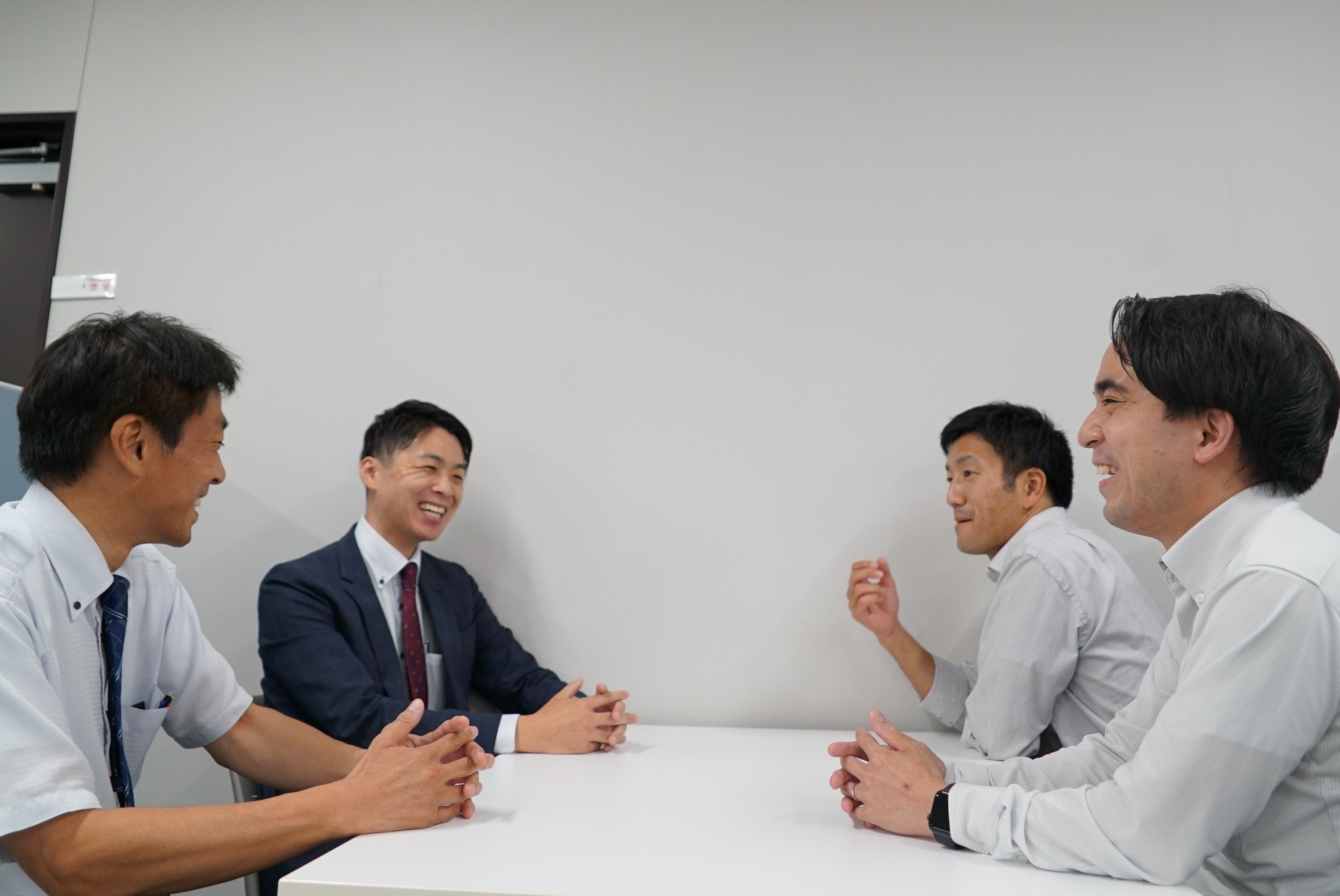 Mr. Suezawa naturally builds relationships of trust with his colleagues as well. His hobby is skin diving in the Seto Inland Sea.
What experiences have stuck with you?
When I first joined the company, I didn’t think I was cut out for sales. I was shy and uncomfortable speaking in front of people. Even so, I began working in the field four months after joining, and gradually learned the job with support from my senior colleagues.
One experience that left a particular impression on me was a mistake that I made around that time. There was an occasion when I had failed to arrange for a pharmaceutical requested by a medical institution. Naturally, I was severely reproached. If a medical institution does not receive the necessary pharmaceuticals in time, it can affect the patients being treated. The incident made me conscious of the weight of the responsibility involved in delivering pharmaceuticals and the fact that there are patients beyond every delivery. It also made me aware of the role we play in the social infrastructure that supports regional healthcare through the stable supply of pharmaceuticals. Even today, this awareness remains the foundation of my approach to work.
What would you say was the turning point in your career?
In 2023, I was put in charge of sales to a university hospital in Kagawa Prefecture. University hospitals have a wide range of medical departments and related divisions, and doing business with them requires not only information about items such as pharmaceuticals, but also an understanding of how the hospital as a whole is organized and operated. Working with so many medical professionals also necessitated providing more specialized information and proposals. I had felt I was doing my best in my own way up to that point, but when I was assigned to that role, I honestly felt almost defeated.
I knew I couldn’t go on like that, so I reconsidered my approach. I began by seeking a deeper understanding of the issues faced by the university hospital. First, I held discussions with hospital personnel and carefully explored what problems they faced and what they required. I did this because I thought that seeing the issues from their perspective was the first step toward providing optimal proposals. Then, I collected information that could help address those issues from pharmaceutical companies and our own relevant internal departments, and used it to formulate proposals. I built relationships with pharmaceutical manufacturer representatives and customers, and gathered information within the hospital, doing what I could one step at a time.
These days, I am increasingly being approached by hospital personnel about matters other than pharmaceuticals. I was recently asked about introducing a booking system for outpatient appointments. I coordinated with relevant personnel both inside and outside the Alfresa Group to develop a proposal, which the hospital subsequently adopted. The Alfresa Group offers a wide range of services to address the issues faced in medical settings, and I think our ability to leverage these for proposals is one of the Group’s collective strengths. We listen to people on the front lines, identify issues, and bring together expertise and services from both inside and outside the company to offer solutions. I’ve come to realize through various successes that by undertaking this work, we MSs are turning the Group’s collective strength into concrete value. The fact that hospital personnel now consult me on matters beyond pharmaceuticals might be a result of the approach I’ve maintained—“Put yourself in the shoes of the customer’s staff.”
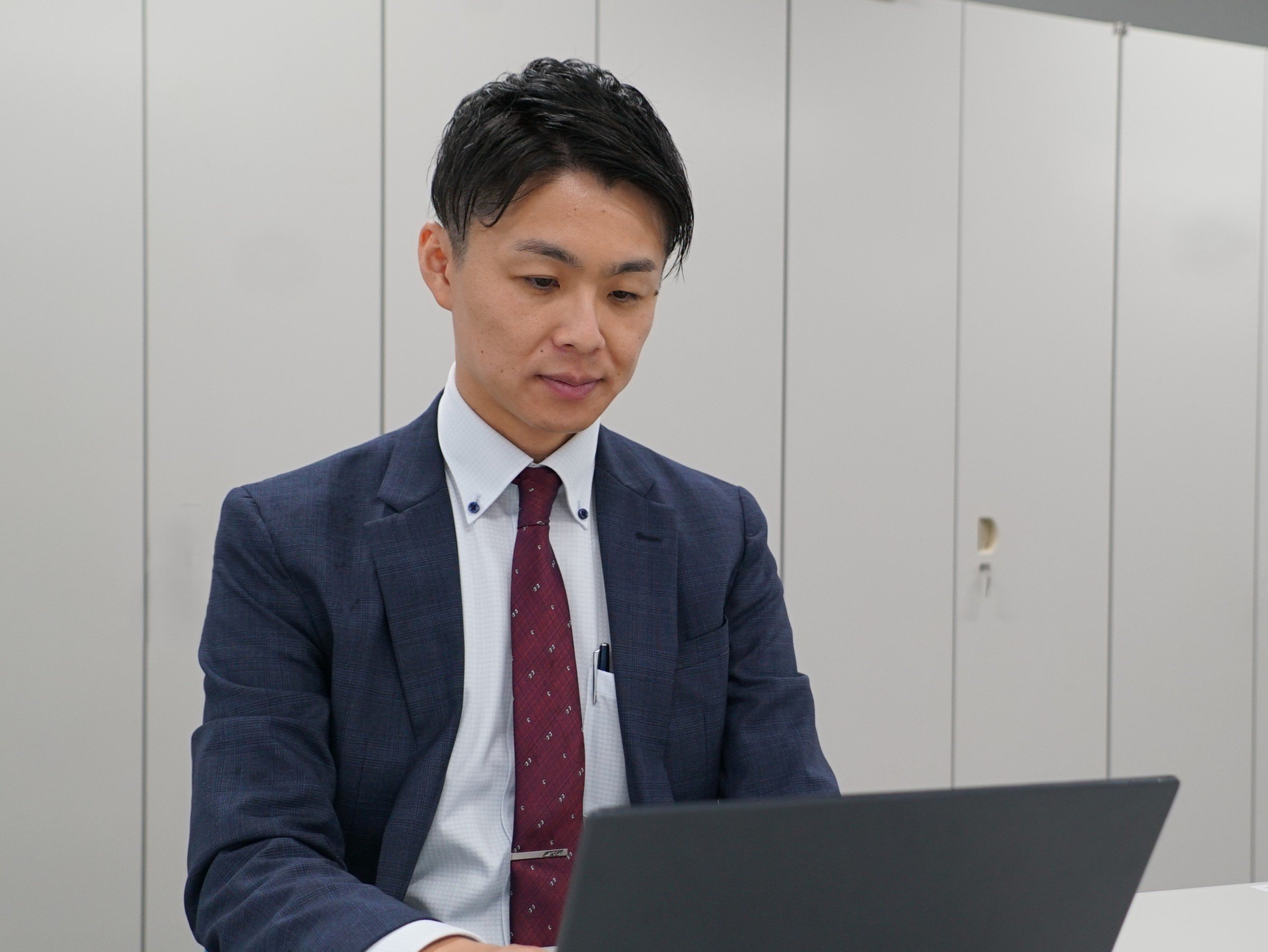 Mr. Suezawa also emphasizes gathering information and making proposals that help address customers’ issues.
We understand that there was an experience that changed your attitude toward your work.
Yes. It was my experience being involved in the distribution of a pharmaceutical relating to a rare disease. For this pharmaceutical, it was particularly important to maintain quality control until the product was delivered to the patient, so arrangements had to be made in close coordination with a wide range of relevant parties. I worked with the medical institution, pharmaceutical company, and relevant departments inside our company, carefully confirming each step one by one. After the product had been safely delivered to the patient, I happened to see a documentary about the rare disease in question. It showed a young patient and the patient’s family living with the disease. Seeing the patient speak positively about the future even while living with the disease made me realize again that every pharmaceutical I deliver is used by a patient with his or her own life story. As a father of two, seeing the patient and the patient’s family moved me deeply. This experience drove home the fact that there are patients on the other end of what I do, and really prompted me to reflect on the meaning of my work.
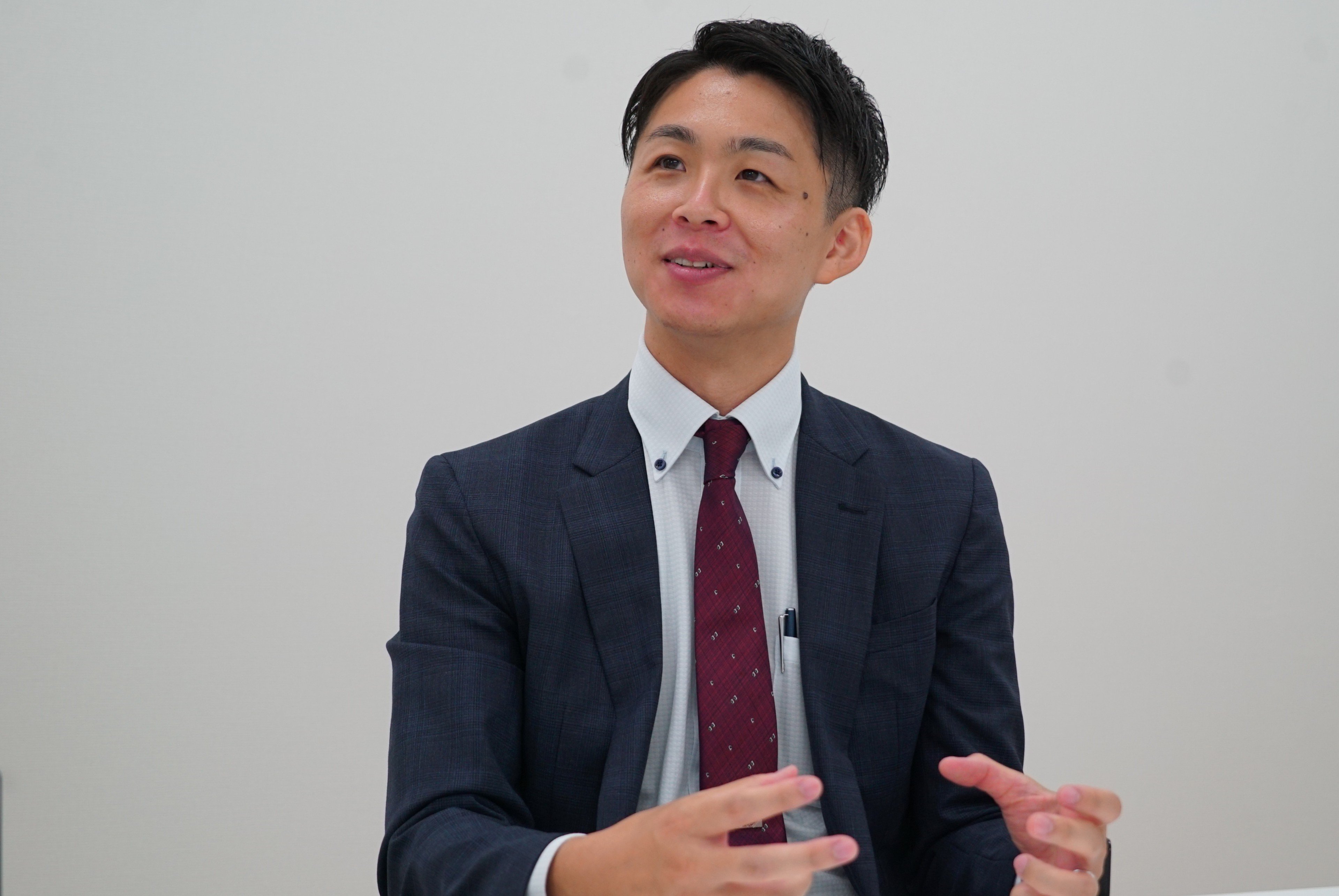 Mr. Suezawa says that as a father of two, delivering pharmaceuticals prompted him to reflect on the significance of his work.
What challenges do you look forward to undertaking?
I’m going to take on the role of section manager in October, and my first priority will be to build a good team. I want junior employees to take on challenges without fear of failure. I myself have grown through being given opportunities to take on a wide range of challenges. I’ve experienced situations where I didn’t want to take a step forward because I felt I lacked knowledge or was afraid of disapproval, and I believe that not doing anything is the greatest waste of all. That’s why I want to be a manager who can say, “Give it a try—I’ll take the ultimate responsibility.”
In terms of team-building, I want to build a team that naturally attracts pharmaceutical company representatives. By bringing together expertise and information, we can respond more effectively to the issues faced in medical settings. I firmly believe that this will help us provide the pharmaceuticals and services that patients need. For the sake of patients and regional healthcare, I want to continue growing.
Comment from Mr. Suezawa’s supervisor
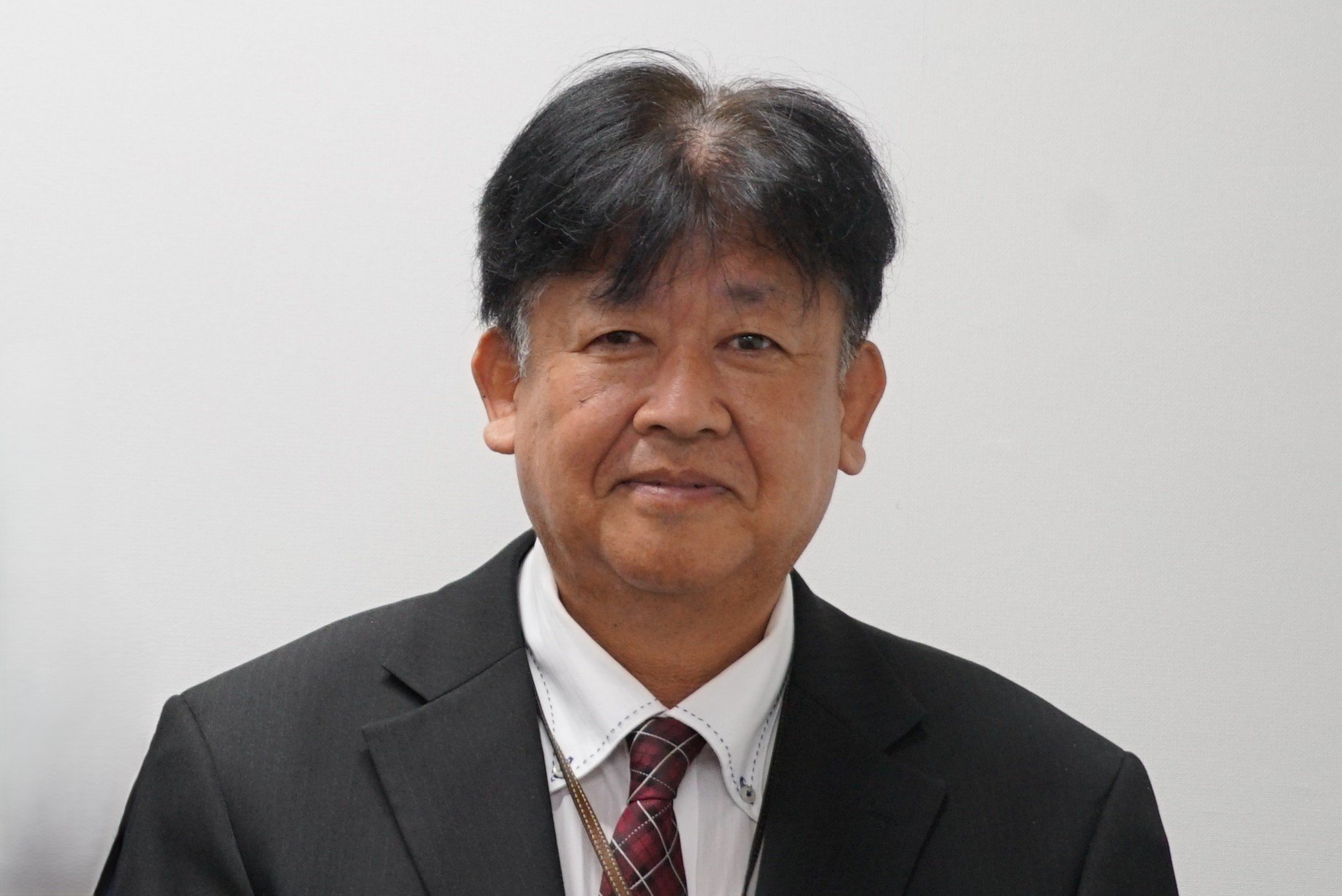 Mr. Mitsuru Tanimoto, General Manager of Takamatsu Branch 1 and Takamatsu Office, Kagawa-Kochi Division, Sales Headquarters
“Someone who can involve the people around him while striving to solve issues”
As an MS responsible for a university hospital, Mr. Suezawa works carefully to identify issues faced by customers and coordinates with relevant personnel both inside and outside the company to propose solutions. He is driven by a commitment to always consider matters from the other party’s perspective. In October, he will take the next step in his career as a section manager. I look forward to seeing him draw on his innate enthusiasm for challenges and lead his team forward.
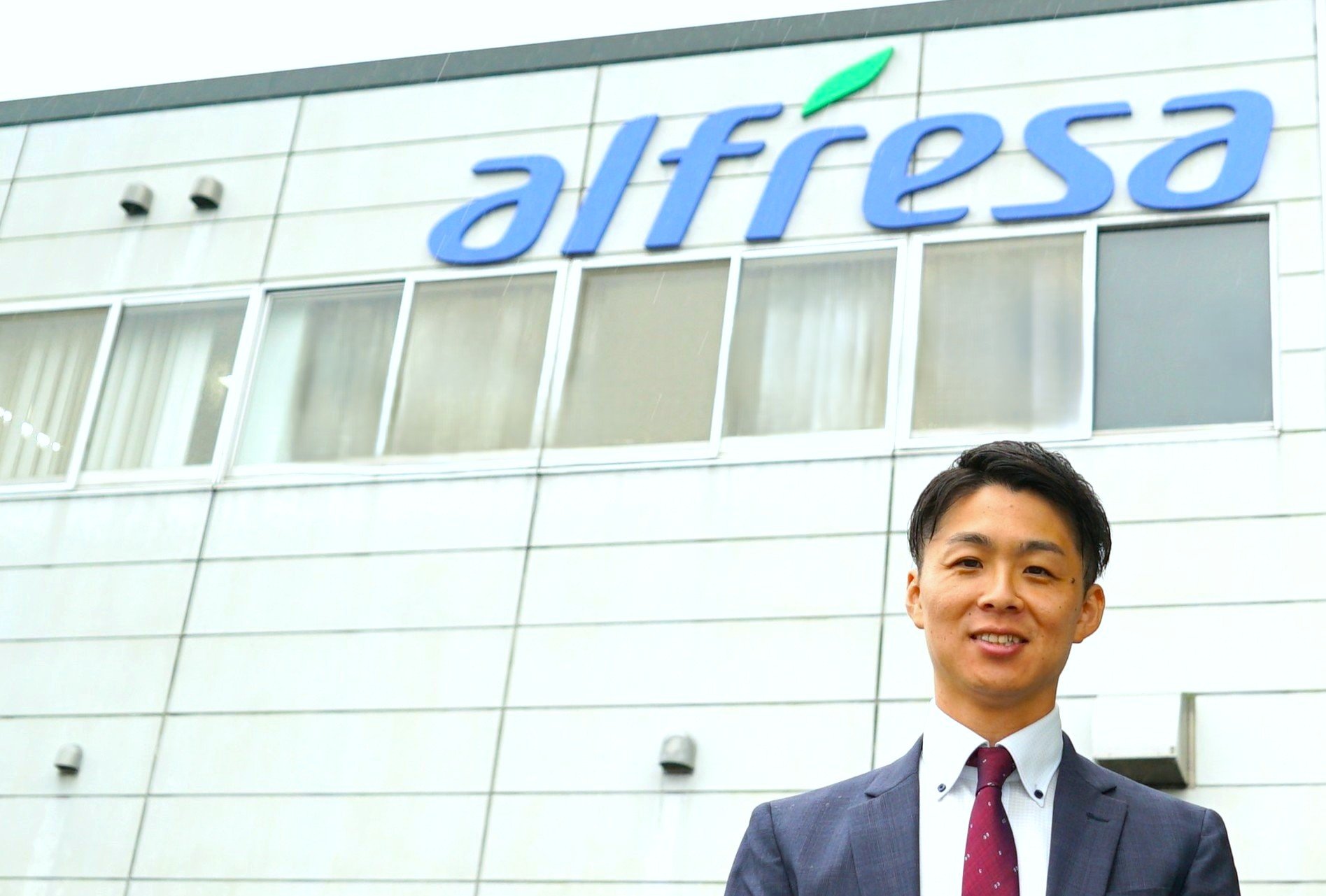 Determined to contribute to regional healthcare, Mr. Suezawa is taking the next step in his career.
Notice: This document is a translation of the original Japanese document and is for reference purposes only. In the event of any discrepancy between this translated document and the original Japanese document, the latter shall prevail.